

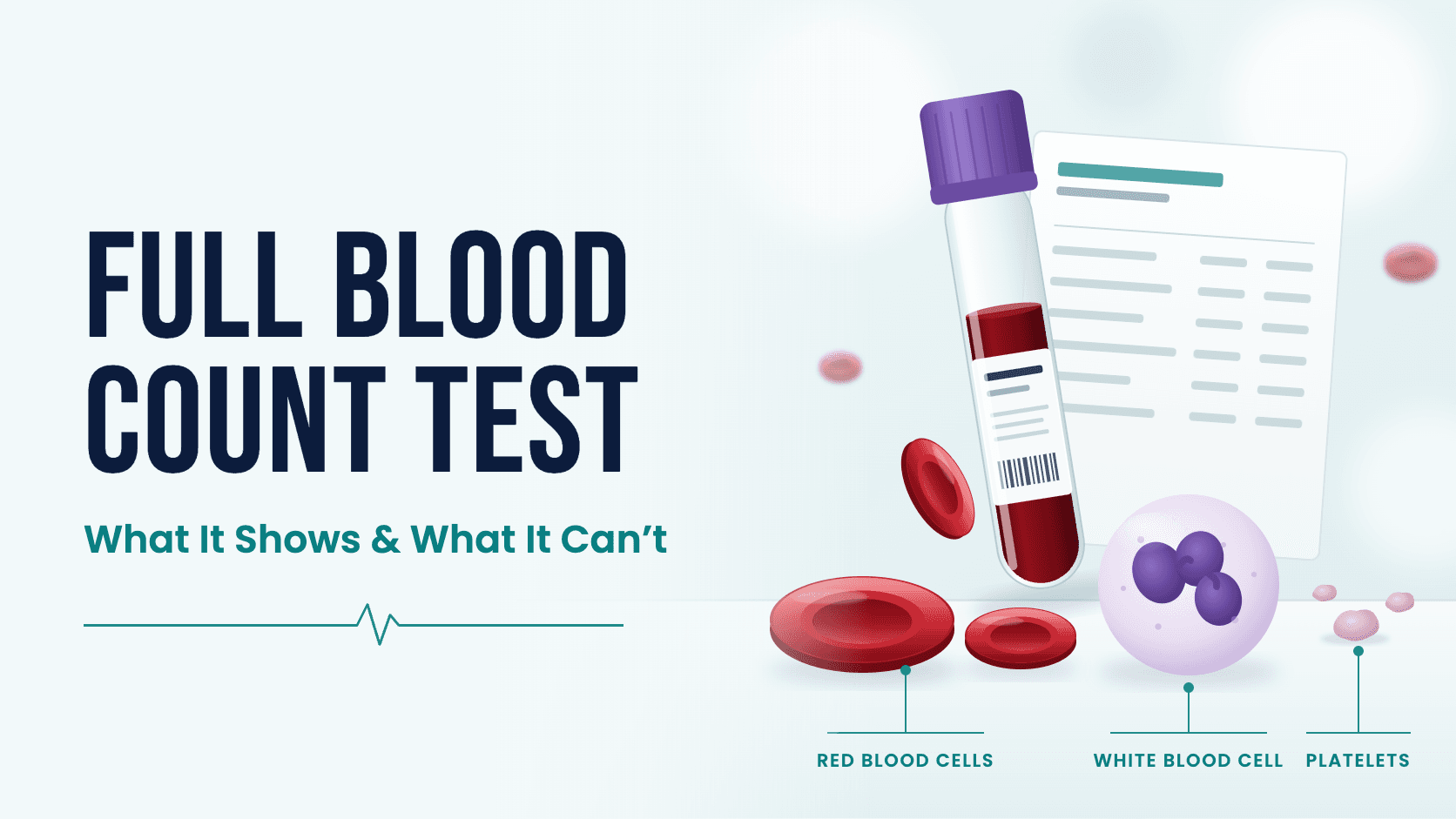
If you've been asked to have a full blood count (FBC) test, or you've spotted "FBC" on a blood test form, you may be wondering what it actually looks at. This guide explains what a full blood count test shows, why a clinician might request one, and what it can't tell you on its own.
It also explains how to have a full blood count at our Whitefield clinic.
What is a full blood count test?
A full blood count is a blood test that looks at the cells in your blood. From one blood sample, the laboratory measures your:
- red blood cells
- haemoglobin
- white blood cells
- platelets
What does a full blood count show?
Part of the test | What it is | What the test reports |
|---|---|---|
Red blood cells | Cells that carry oxygen around your body | How many there are and how big they are |
Haemoglobin | The substance inside red blood cells that carries oxygen | How much there is in your blood |
White blood cells | Cells that help your body fight infection | How many there are and the mix of different types |
Platelets | Tiny cells that help your blood clot | How many there are |
Red blood cells
Red blood cells carry oxygen from your lungs to the rest of your body. The test counts them and measures their size. Average red cell size is reported as the mean cell volume (MCV), which we explain in our guide to MCV blood tests.
Haemoglobin
Haemoglobin isn't a cell. It's the substance inside red blood cells that carries oxygen. A haemoglobin level below the normal range for your age and sex is called anaemia.
White blood cells
White blood cells help your body fight infection. A full blood count counts them and breaks them down into their different types. Together, these results can help a clinician look for signs of infection and other conditions.
Platelets
Platelets are tiny cells that help your blood clot and stop bleeding. The test counts how many you have.
Why might a clinician request a full blood count?
A clinician might suggest a full blood count to help look into symptoms, to check for anaemia, or to look for signs of infection and other conditions that affect the blood.
For example, NICE guidance on iron deficiency anaemia recommends a full blood count when iron deficiency anaemia is suspected.
If you're not sure whether a full blood count is the right test for you, a doctor can help you decide.
What a full blood count can't tell you on its own
A full blood count gives useful clues, but not the whole picture.
It can show a low haemoglobin, but not the cause
A full blood count alone can't confirm iron deficiency. To find out whether low iron is behind a low haemoglobin, a clinician usually checks your ferritin level, which reflects your body's iron stores, and may arrange other tests too (NICE guidance). They then look at those results alongside your symptoms and medical history to work out the cause.
A normal result doesn't rule everything out
Some women who have periods can have a normal haemoglobin level but low iron stores. A full blood count doesn't measure iron stores, so it won't show this.
It doesn't check blood sugar or cholesterol
A full blood count doesn't measure blood sugar (glucose) or cholesterol, so it isn't used to check for diabetes or to measure cholesterol. Those need separate blood tests, which you'll find in our blood test menu.
It isn't a cancer test
A full blood count can't diagnose cancer on its own. Doctors may use it alongside other tests when assessing symptoms that could point to some blood cancers, such as leukaemia. If you're worried about a symptom, speak to a doctor rather than relying on a blood test.
How are full blood count results interpreted?
Each result is compared with a reference range set by the laboratory that analysed your sample. Reference ranges differ between laboratories, and some depend on your age and sex, so always compare a result with the range printed on your own report.
A single result doesn't make a diagnosis. Your results need reading alongside your symptoms, your medical history and the laboratory's reference ranges.
Your results come with a doctor's report. If you'd like a clinician to go through your results with you, you can ask for this.
Our results are for screening and information, and they don't replace advice from your doctor. If any of your results concern you, share them with your doctor.
What happens when you have a full blood count with us
We offer the full blood count at our Whitefield clinic. It's a 15-minute appointment at The Chemist Live, 210 Bury New Road, Whitefield, Manchester, M45 6GG, where a blood sample is taken. It costs £49, and the clinic is open Monday to Friday, 9am to 5pm.
The test is generally for people aged 16 or over.
If you have any questions before your appointment, contact our team.
Book a full blood count
You can book a full blood count online, with the test already selected.
If you have a question before you book, you can contact us.
If you feel unwell or are worried about a symptom, don't wait for a test: speak to a doctor or call 111. In an emergency, call 999.
Sources
Frequently asked questions
What does FBC stand for?+
FBC stands for full blood count, a blood test that looks at your red blood cells, haemoglobin, white blood cells and platelets.
Can a full blood count confirm iron deficiency?+
No. It can show a low haemoglobin, but finding out whether low iron is the cause needs further tests, such as a ferritin test.
Does a full blood count test for diabetes or cholesterol?+
No. It doesn't measure blood sugar or cholesterol. Those are separate blood tests.