
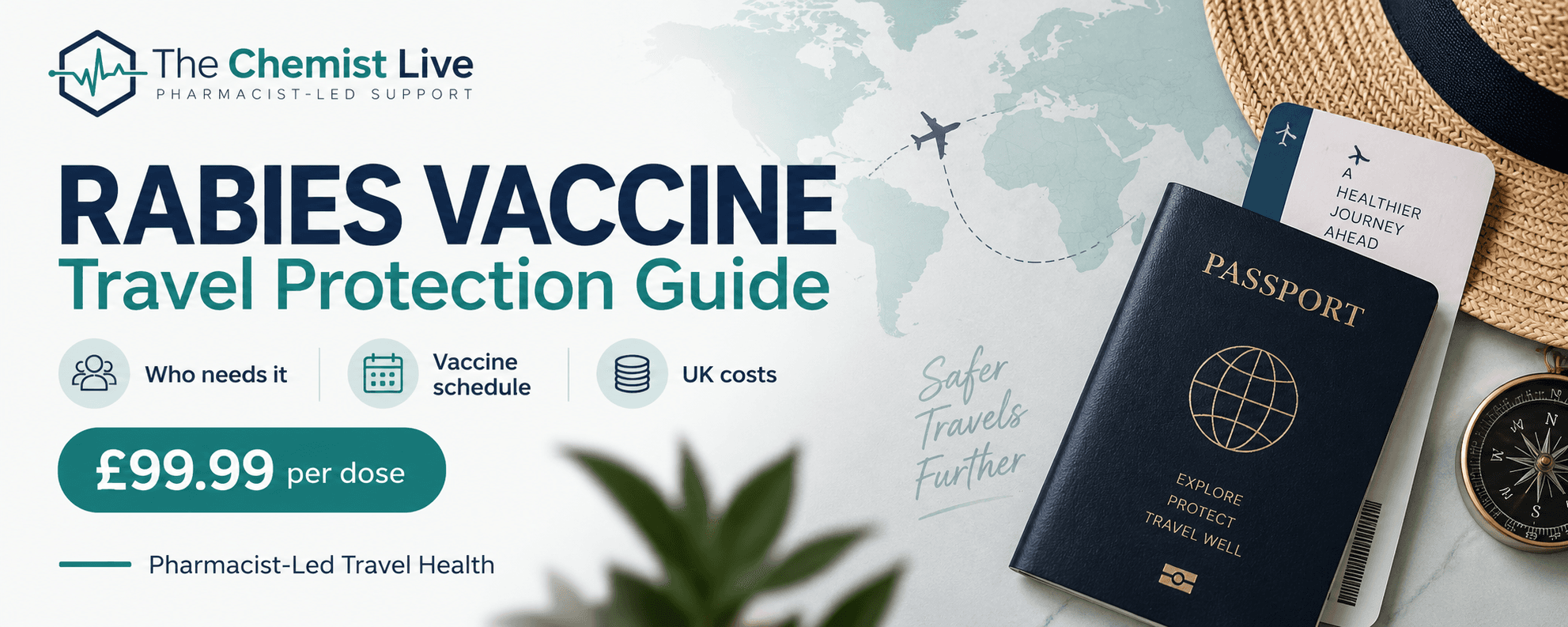
Planning travel to an area where rabies is present? The rabies vaccine may be recommended depending on your destination, length of stay, access to medical care and potential contact with animals. This guide covers who may need the rabies vaccine, the vaccination schedule, private UK costs and what to do after a possible exposure.
What is the Rabies Vaccine?
The rabies vaccine is a critical preventive measure for those at risk of exposure to rabies, a viral disease affecting the central nervous system and often fatal once symptoms appear. The vaccine works by stimulating the immune system to produce antibodies that neutralise the rabies virus, thereby providing immunity against the disease.
In the UK, more than one rabies vaccine is available, including Rabipur and Verorab. These vaccines are typically used to immunise people before exposure (pre-exposure prophylaxis) or to provide protection after exposure (post-exposure prophylaxis).
Who Needs the Rabies Vaccine Before Travelling?
The need for a rabies vaccine before travelling depends on the destination and the planned activities. High-risk destinations often include countries in Africa, Asia, and Central and South America, where rabies is prevalent among wild and domestic animals.
Travellers engaging in activities that increase their risk of exposure, such as volunteering in animal shelters or working with wildlife, should strongly consider vaccination. Those planning extended stays in rural areas or having close contact with animals face a heightened risk. Consult a pharmacist at The Chemist Live to assess your specific travel plans and risks.
Additional Travel Considerations
- Duration of Stay: Longer stays increase the likelihood of exposure.
- Local Healthcare: Limited access to medical services may necessitate vaccination.
- Children: Extra caution is advised as children may not report animal bites immediately.
Rabies Vaccine Schedule and Doses Required
Pre-Exposure Prophylaxis
Our preferred pre-travel rabies vaccination schedule is three doses given on days 0, 7 and 21 or 28. If a traveller is departing sooner, an accelerated schedule on days 0, 3 and 7 may be considered following an individual risk assessment. The accelerated course requires an additional dose one year later for continued protection in those who remain at risk. The appropriate schedule also depends on the vaccine used and the traveller's individual circumstances.
For those continually at risk, the need for any further booster is guided by antibody titres, which can be checked through blood tests.
Post-Exposure Prophylaxis
Post-exposure recommendations can vary, but generally include a series of four doses on days 0, 3, 7, and 21, often combined with rabies immunoglobulin, especially in high-risk bites.
Completing the recommended vaccination schedule is important for achieving the intended immune response, and missing any doses could leave you vulnerable.
Extended Schedules and Monitoring
In some situations, vaccine schedules may need to be adjusted, such as for those with altered immune systems, requiring close monitoring and consultation with healthcare providers.
How Much Does the Rabies Vaccine Cost in the UK?
At The Chemist Live, the rabies vaccine is £99.99 per dose. The total cost will depend on the number of doses required for your specific situation.
Factors influencing the cost include the number of doses you need and any consultation fee.
Given these considerations, it's wise to budget for the full vaccination course ahead of your travels. Book your vaccination consultation at The Chemist Live to plan accordingly.
Rabies Vaccine Cost at The Chemist Live
Provider | Cost per Dose |
|---|---|
The Chemist Live | £99.99 |
The number of doses you need depends on your travel plans and your level of risk, so your total is confirmed at your travel consultation. Consider extra costs for additional boosters or consultation fees, especially for extended travel.
Understanding Costs Further
- Consultation Fees: Prices may vary depending on individual consultations.
How Long Does the Rabies Vaccine Last?
How long protection lasts, and whether a booster is needed, depends on why you were vaccinated and how often you are likely to be exposed. For people with frequent or unrecognised exposure, such as bat handlers, a reinforcing dose is given one year after the primary course, with a further booster at three to five years or based on antibody testing.
Pharmacists can assist in monitoring your immunity levels and recommend boosters if needed. To determine whether a booster is required, an antibody test can be performed to check the response level.
Understanding Booster Needs
- Continued Risk Assessment: Regular evaluation for high-risk occupations.
- Antibody Testing: Periodic tests to ensure immunity is maintained.
What to Do if Bitten After Vaccination
If you receive a bite from a potentially rabid animal after vaccination, immediate action is crucial. Clean the wound thoroughly with soap and water, and seek medical advice without delay. Post-exposure prophylaxis might still be required depending on the severity of the exposure and your previous vaccination status.
Pharmacists at The Chemist Live can provide guidance on necessary steps following exposure.
Possible Side Effects of the Rabies Vaccine
Common Side Effects
Most side effects of the rabies vaccine are mild and manageable. These include tenderness, redness, or swelling at the injection site, along with mild fever and headache.
Rare but Serious Side Effects
Severe allergic reactions are rare but require immediate attention. These may include difficulty breathing, hives, or swelling of the face and throat. Report any unusual side effects to the MHRA through the Yellow Card Scheme.
Monitoring and Reporting
- Immediate Care: Seek help if severe reactions occur.
- Documentation: Keep track of any side effects experienced.
Alternatives to the Rabies Vaccine
While vaccination is the most effective prevention measure, travellers can reduce risk through behaviour. Avoid contact with wild animals, adhere to local safety guidelines, and consider preventative training, especially in remote or rural areas.
Education about wildlife interactions can significantly decrease the risk of rabies exposure without solely relying on vaccination.
- Protective Gear: Wear appropriate clothing to minimise exposure.
- Awareness: Stay informed about the rabies status in your destination.
By preparing thoroughly and understanding your needs, the risk of rabies can be effectively managed. You can book a travel vaccination appointment at The Chemist Live to ensure a safe and healthy trip.
FAQs
1. How does the rabies vaccine work?
The vaccine stimulates the immune system to produce antibodies that neutralise the rabies virus, providing protection against the disease.
2. Who needs a rabies vaccine before travelling?
Travellers to high-risk areas or those engaging in activities with animals in such regions should consider vaccination.
3. How many doses of the rabies vaccine are required?
Typically, three doses for pre-exposure and four to five for post-exposure, depending on risk and exposure.
4. How much does it cost to get a rabies vaccine privately in the UK?
At The Chemist Live the rabies vaccine is £99.99 per dose. The number of doses you need is confirmed at your travel consultation.
5. How long does the rabies vaccine protect you?
It depends on why you were vaccinated and how often you may be exposed. Where ongoing exposure is likely, a reinforcing dose is given one year after the primary course, with a further booster at three to five years or based on antibody testing.
6. What are the side effects of the rabies vaccine?
Side effects can include mild fever and site tenderness, with rare severe reactions needing medical attention.
7. Is the rabies vaccine free for travel?
Rabies vaccination for travel is not routinely funded, so travellers usually arrange it privately.
8. What should I do if I miss a dose?
Contact The Chemist Live immediately to reschedule the missed dose and maintain your vaccination schedule. Missing doses could reduce protection, so timely adjustments are crucial.
9. How can I reduce my risk of rabies exposure?
Avoid contact with wild animals, wear protective clothing, and educate yourself about regional risks.
By understanding and preparing with the right vaccinations, you can protect yourself effectively from potential health risks during your travels. For personalised advice, consult with our pharmacy professionals at The Chemist Live.