

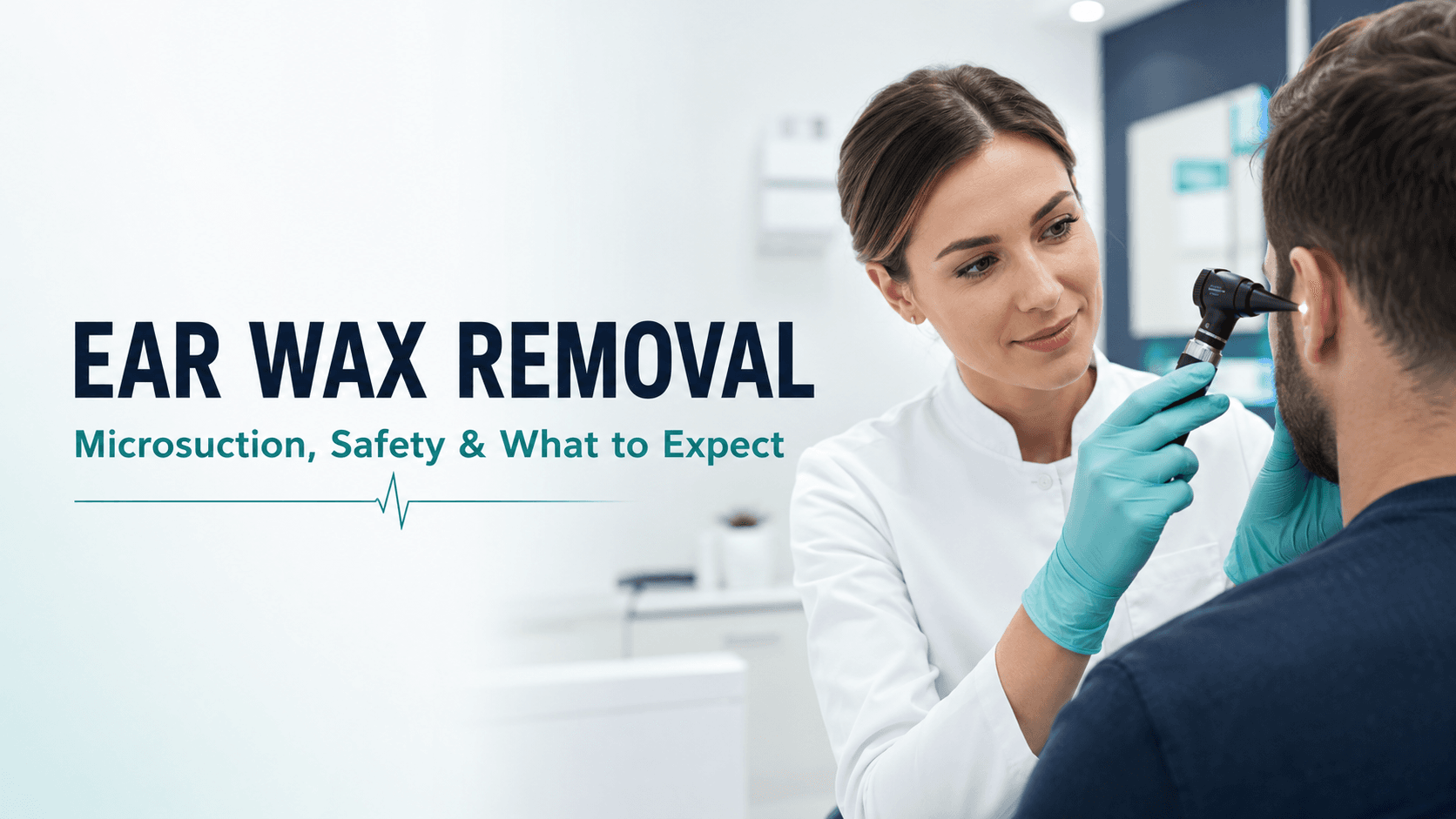
Understanding Ear Wax and Its Role
Ear wax, medically known as cerumen, is a natural substance produced by glands in the ear canal. Far from being simply dirt, it plays a protective role: it traps dust and debris, helps keep the ear canal moist, and has properties that guard against some bacteria. In most people the ear is self-cleaning, and wax works its way out naturally. Problems only arise when wax builds up faster than it can clear, hardens, or is pushed deeper by cotton buds, leading to blockage, muffled hearing, discomfort or a feeling of fullness in the ear.
When a build-up causes symptoms, safe professional removal is often the best option. This guide explains how microsuction works, how it compares with other methods, what happens at a typical appointment, and how to book.
What Is Ear Wax Removal?
Ear wax removal is a procedure to clear excess or impacted wax from the ear canal. It is usually carried out when a build-up is affecting hearing, causing discomfort, or getting in the way of an examination or a hearing-aid fitting. The three main methods used today are ear irrigation, softening drops, and microsuction, and they differ in how the wax is removed and how suitable they are for different ears.
Methods of Ear Wax Removal
Ear Irrigation (Syringing)
Irrigation uses a controlled flow of warm water to flush wax out of the ear canal. It can be effective for softer wax, but it is not suitable for everyone, particularly people with a history of ear surgery, a perforated eardrum, or frequent ear infections.
Ear Drops
Softening drops, such as those based on olive oil or sodium bicarbonate, can loosen mild wax build-up over several days. They are a gentle first step for minor cases, but they do not physically remove wax and may not be enough for a firm or long-standing blockage.
Microsuction
Microsuction uses a gentle suction device, together with a microscope or magnifying loupes, to lift wax out of the ear under direct vision. Because the clinician can see clearly into the ear canal throughout, it is widely regarded as one of the most precise and controlled methods available.
Comparative Analysis
Method | How it works | Best suited to |
|---|---|---|
Irrigation | Warm water flushes wax out | Softer wax, ears with no history of problems |
Ear drops | Softens wax over several days | Mild build-up, or preparation before removal |
Microsuction | Suction lifts wax out under a microscope | Most ear types, including harder or impacted wax |
What Is Microsuction Ear Wax Removal?
Microsuction is a dry, water-free procedure. The clinician examines the ear canal under magnification and uses a fine, low-pressure suction tube to remove the wax directly. Because no water is introduced into the ear, it can be a good option for people who are not suitable for irrigation, including those with a perforated eardrum or a history of ear problems.
How Microsuction Works
During the procedure, the clinician positions a microscope or wears magnifying loupes to get a clear, well-lit view of the ear canal. The suction device, which sounds a little like a small vacuum, gently draws the wax away. The whole process is carried out slowly and under direct vision, which is why it is considered a controlled and comfortable procedure for most people.
Benefits of Microsuction Over Other Methods
Microsuction offers several practical advantages. Because the clinician can see the ear canal clearly throughout, the procedure is precise and the risk of pushing wax deeper is low. It is water-free, which makes it suitable for a wider range of ears than irrigation, and it is usually quick, often completed in a single visit once the wax has been assessed. Many people also notice an immediate improvement in hearing once a blockage is cleared.
Is Ear Microsuction Safe?
Microsuction is considered a safe procedure when performed by trained professionals. Potential risks may include mild discomfort or temporary dizziness. Evidence supports its safety and effectiveness in reducing discomfort due to excess wax build-up. As with any procedure, side effects such as brief noise from the suction, a slight tickling sensation, or short-lived lightheadedness can occur, and a trained clinician will explain these to you and check that microsuction is right for your ears before going ahead. Guidance from NICE supports professional wax removal where a build-up is causing symptoms.
The Two-Stage Ear Appointment: Assessment Then Treatment
Ear appointments are generally carried out in two stages, and understanding this helps you know what to expect.
Stage 1: Assessment and Diagnosis
At the first stage, the clinician examines your ears to check for wax and to confirm whether microsuction is actually needed and suitable for you. This assessment looks at the amount and position of the wax, the condition of the ear canal, and any history of ear problems. In some cases the ears may not need treatment at all, or a different approach may be more appropriate.
Stage 2: The Microsuction Procedure
If the assessment confirms that microsuction is suitable, the second stage is the procedure itself, where the wax is removed under magnification as described above. Separating the two stages means treatment is only carried out when it is genuinely needed and safe to do so, rather than as an automatic step.
How to Prepare for Your Appointment
Preparation is usually straightforward, and the ear clinic will advise you on how to prepare before your appointment and recommend anything needed if appropriate. In many cases this may include using softening drops, such as olive oil, for a few days beforehand to make the wax easier to remove, but you should follow the specific guidance given by the clinic rather than assuming this is required. If you have any history of ear surgery, a perforated eardrum, ear infections, or if you wear hearing aids, let the clinic know in advance so they can plan your appointment safely. Avoid using cotton buds, which can push wax deeper and make removal harder.
Suitable Candidates for Microsuction
Microsuction is suitable for most people with troublesome ear wax, including those who are not able to have irrigation. It is often recommended for people with a history of ear problems, a perforated eardrum, hearing-aid users, and anyone whose wax has become hard or impacted. The assessment stage exists precisely to confirm suitability, so the clinician will always check your ears first and discuss any factors that might affect the procedure.
Cost of Ear Wax Removal
The cost of ear wax removal in the UK typically ranges from around £50 to £100, depending on the provider and whether one or both ears are treated. Some prices cover the initial assessment as well as the procedure, while others charge separately, so it is worth checking exactly what a quoted price includes before you book. Because microsuction is often completed in a single visit, it can be a convenient and cost-effective way to resolve a troublesome build-up.
Booking an Ear Wax Removal Appointment
Booking a private appointment is quick and can usually be arranged for a convenient time, often on the same day. Book your slot now at The Chemist Live and a trained clinician will assess your ears and, if suitable, carry out the microsuction there and then. You can also read more about our ear care and wider pharmacy services.
What to Expect on the Day
At your appointment, the clinician will first examine your ears (stage one), explain what they find, and confirm whether microsuction is suitable. If it is, the procedure itself (stage two) usually takes only a few minutes per ear. Most people find it comfortable and can return to their normal day straight afterwards, often with noticeably clearer hearing.
FAQs
What is ear microsuction?
Ear microsuction is a water-free method of removing ear wax using gentle suction while the clinician views the ear canal under magnification.
How often should I have my ears microsuctioned?
This varies from person to person. Some people rarely need it, while those who produce a lot of wax or wear hearing aids may need it periodically. Your clinician can advise based on your ears.
Is microsuction painful?
Most people find microsuction comfortable and well tolerated. You may hear some noise from the suction or feel a mild tickling sensation, but discomfort is usually minimal.
Can microsuction be used for children?
Microsuction can be suitable for children in some cases, but this should always be assessed by a trained clinician who will decide whether it is appropriate.
What should I avoid before the procedure?
Avoid using cotton buds, which push wax deeper, and follow any preparation advice the clinic gives you. Let the clinic know about any ear surgery, perforated eardrum or infections beforehand.
How do I book my microsuction appointment?
You can book online with The Chemist Live and choose a convenient time for your assessment and, if suitable, treatment.